OpenClaw: Why Nvidia CEO Jensen Huang Sees It as AI's Windows Moment
Nvidia CEO Jensen Huang, a visionary often at the forefront of technological shifts, recently made a statement that has reverberated across the global artificial intelligence landscape: OpenClaw is "definitely the next ChatGPT." More profoundly, Huang has likened OpenClaw's potential impact to that of Microsoft Windows on personal computing, envisioning it as AI's pivotal "Windows moment." This bold declaration underscores a profound belief in OpenClaw's capacity to transform how users interact with and leverage AI, heralding a new era of accessibility, functionality, and widespread adoption.
For those closely following the rapid evolution of AI, Huang's insights are not to be taken lightly. His commentary swiftly sent ripples through Asian tech markets, particularly in China, where companies actively embracing OpenClaw-based solutions saw their shares surge. But what exactly is OpenClaw, and why does one of the most influential figures in tech believe it holds such transformative power? This article delves into the significance of Jensen Huang's OpenClaw endorsement, explores its implications for the global AI ecosystem, and offers insights into navigating this burgeoning technological frontier.
The Dawn of a New AI Era: Why Jensen Huang Sees OpenClaw as AI's "Windows Moment"
To understand the depth of Huang's "Windows moment" analogy, we must recall the revolutionary impact of Microsoft Windows. Before Windows, personal computers were largely domain of enthusiasts and professionals comfortable with command-line interfaces. Windows democratized computing, providing an intuitive graphical user interface (GUI) that made PCs accessible to millions, fostering an explosion of software development and ultimately transforming daily life. Jensen Huang posits that OpenClaw is poised to achieve a similar feat for artificial intelligence.
OpenClaw is an open-source AI agent, a sophisticated form of AI designed not just to process information but to take action, integrate with various tools, and perform complex tasks autonomously. Unlike large language models (LLMs) like ChatGPT, which are primarily conversational, AI agents built on frameworks like OpenClaw can understand goals, plan steps, execute actions, and adapt to achieve desired outcomes. Huang's comparison to ChatGPT acknowledges the latter's groundbreaking role in making AI conversational and widely known, but suggests OpenClaw represents the next evolutionary step: making AI proactive and deeply integrated into workflows.
The "Windows moment" analogy perfectly encapsulates OpenClaw's potential to:
- Democratize AI: By providing an open-source framework, OpenClaw lowers the barrier to entry for developers and businesses, allowing them to build and deploy sophisticated AI agents without starting from scratch.
- Foster an Ecosystem: Just as Windows spurred an industry of application developers, OpenClaw can ignite a similar wave of innovation for AI agents, leading to specialized tools and services across countless sectors.
- Expand User Capabilities: OpenClaw enables users to achieve far more with AI than ever before, moving beyond mere queries to automating multi-step processes, personalizing experiences, and enhancing productivity on an unprecedented scale.
This shift from static models to dynamic, agentic AI marks a significant leap, empowering users and businesses to harness AI's full potential in tangible, actionable ways.
OpenClaw's Roar in China: Fueling the "AI Tigers"
The immediate impact of Jensen Huang's OpenClaw remarks was particularly pronounced in China, a nation rapidly solidifying its position as a global AI powerhouse. Chinese artificial intelligence stocks saw substantial gains, reflecting the market's enthusiasm for OpenClaw's potential. Companies like MiniMax and Knowledge Atlas Technology (Zhipu), two of China's rising "AI tigers," experienced significant surges in their share prices – 22% and 14% respectively in Hong Kong.
These companies are not merely reacting to market sentiment; they are actively integrating OpenClaw into their strategies. Both MiniMax and Zhipu have been aggressively ramping up their agentic AI offerings, rolling out tools and platforms built upon the OpenClaw framework. Zhipu, for instance, recently unveiled GLM-5, an open-source large language model specifically designed with enhanced coding abilities and robust support for extended agent-based tasks. This strategic alignment positions them to leverage OpenClaw's capabilities to build advanced AI solutions that can rival global competitors like OpenAI and Anthropic.
As Moody's recently noted, "China’s rapid uptake of artificial intelligence reinforces its position as one of the world’s leading AI markets." While adoption rates vary across sectors due to differing levels of digital readiness, large technology firms are clearly leading the charge in advanced and financially meaningful AI integration. OpenClaw provides a powerful, open-source foundation for these companies to accelerate their AI development, drive innovation, and capture significant market share. The excitement around OpenClaw demonstrates its potential to catalyze growth among China's AI tigers and beyond.
The Agentic Advantage: What OpenClaw Brings to the Table
The true power of OpenClaw lies in its ability to facilitate the creation of AI agents. An AI agent is an intelligent system capable of:
- Perception: Understanding its environment through data inputs.
- Reasoning: Processing information, making decisions, and planning actions to achieve specific goals.
- Action: Executing tasks in the real world or digital environments, often by interacting with other software, APIs, or even robotic systems.
- Learning: Adapting and improving its performance over time based on feedback and new experiences.
For businesses, this translates into unprecedented opportunities for automation and optimization. Imagine AI agents that can autonomously manage complex supply chains, provide hyper-personalized customer support, conduct market research, draft legal documents, or even assist in scientific discovery – all by integrating with existing tools and systems. For developers, OpenClaw provides a standardized, open platform to experiment, innovate, and build these intelligent agents without proprietary lock-ins.
Nvidia's Strategic Play: Powering the OpenClaw Revolution
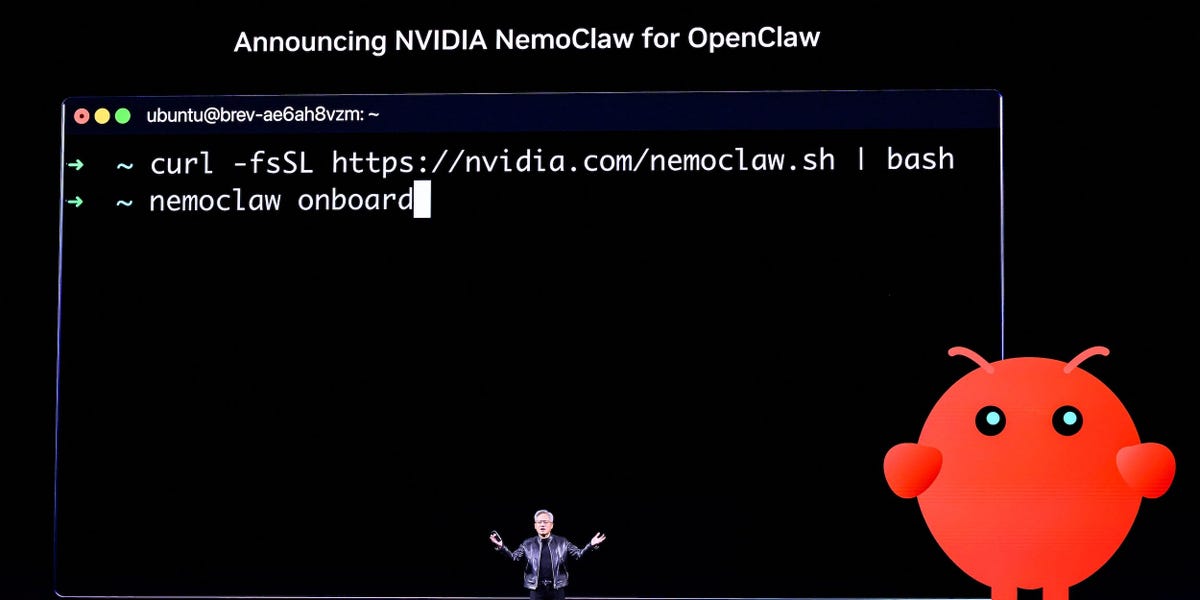
Nvidia's involvement with OpenClaw extends beyond Jensen Huang's vocal endorsement. The company has a vested interest in fostering the growth of the AI ecosystem, as advanced AI applications require immense computational power, primarily provided by Nvidia's GPUs. Nvidia introduced NemoClaw, a platform designed to provide enhanced security features for OpenClaw users, underscoring its commitment to making agentic AI both powerful and reliable.
This strategic move solidifies Nvidia's position not just as a hardware provider but also as a foundational enabler of the next generation of AI. As AI agents become more prevalent, the demand for sophisticated hardware like Nvidia's Blackwell and Vera Rubin platforms will skyrocket. Huang's projection of purchase orders reaching $1 trillion through 2027 reflects this anticipated surge in demand for AI infrastructure, directly fueled by advancements like OpenClaw. The impact is already being felt across the semiconductor industry, with major players like SK Hynix and Samsung Electronics also seeing significant gains as they supply critical components for Nvidia's ecosystem.
Navigating the OpenClaw Landscape: Tips for Businesses and Developers
For businesses and developers looking to capitalize on this "Windows moment" for AI, here are some practical tips:
For Businesses:
- Identify Strategic Use Cases: Don't try to apply OpenClaw everywhere at once. Focus on areas where agentic AI can deliver significant ROI, such as automating repetitive tasks, enhancing customer service, or streamlining data analysis.
- Start Small, Learn Fast: Pilot projects are crucial. Begin with well-defined, contained problems to gain experience and demonstrate value before scaling up.
- Prioritize Data Governance and Security: With AI agents potentially accessing and acting upon sensitive information, robust security protocols and data governance policies, potentially leveraging tools like NemoClaw, are paramount.
- Invest in Talent and Training: Building and managing AI agents requires new skills. Invest in training your existing team or acquiring new talent with expertise in AI agent development and deployment.
For Developers:
- Explore the Open-Source Community: Dive into the OpenClaw community. Contribute, learn from others, and leverage existing frameworks and integrations to accelerate your development.
- Experiment with Agent Architectures: Understand different agentic AI patterns (e.g., reactive, deliberative, hybrid) and experiment with building custom agents tailored to specific tasks.
- Focus on Tool Integration: A key strength of AI agents is their ability to interact with external tools. Master API integrations to enable your agents to perform real-world actions effectively.
- Embrace Ethical AI Practices: As agents gain more autonomy, it's vital to design them with ethical considerations, transparency, and accountability built-in from the ground up.
Conclusion
Jensen Huang's OpenClaw declaration signals a transformative era for artificial intelligence. By likening it to AI's "Windows moment," Huang underscores OpenClaw's potential to democratize sophisticated AI, foster a vibrant ecosystem of innovation, and fundamentally change how we interact with technology. Its rapid adoption in key markets like China, coupled with Nvidia's strategic support, solidifies OpenClaw's position as a catalyst for the next wave of AI evolution. As AI agents become increasingly capable and ubiquitous, embracing OpenClaw offers a clear pathway for businesses and developers to unlock unprecedented value and shape the future of intelligent automation. The era of proactive, autonomous AI is not just coming; with OpenClaw, it's already here.