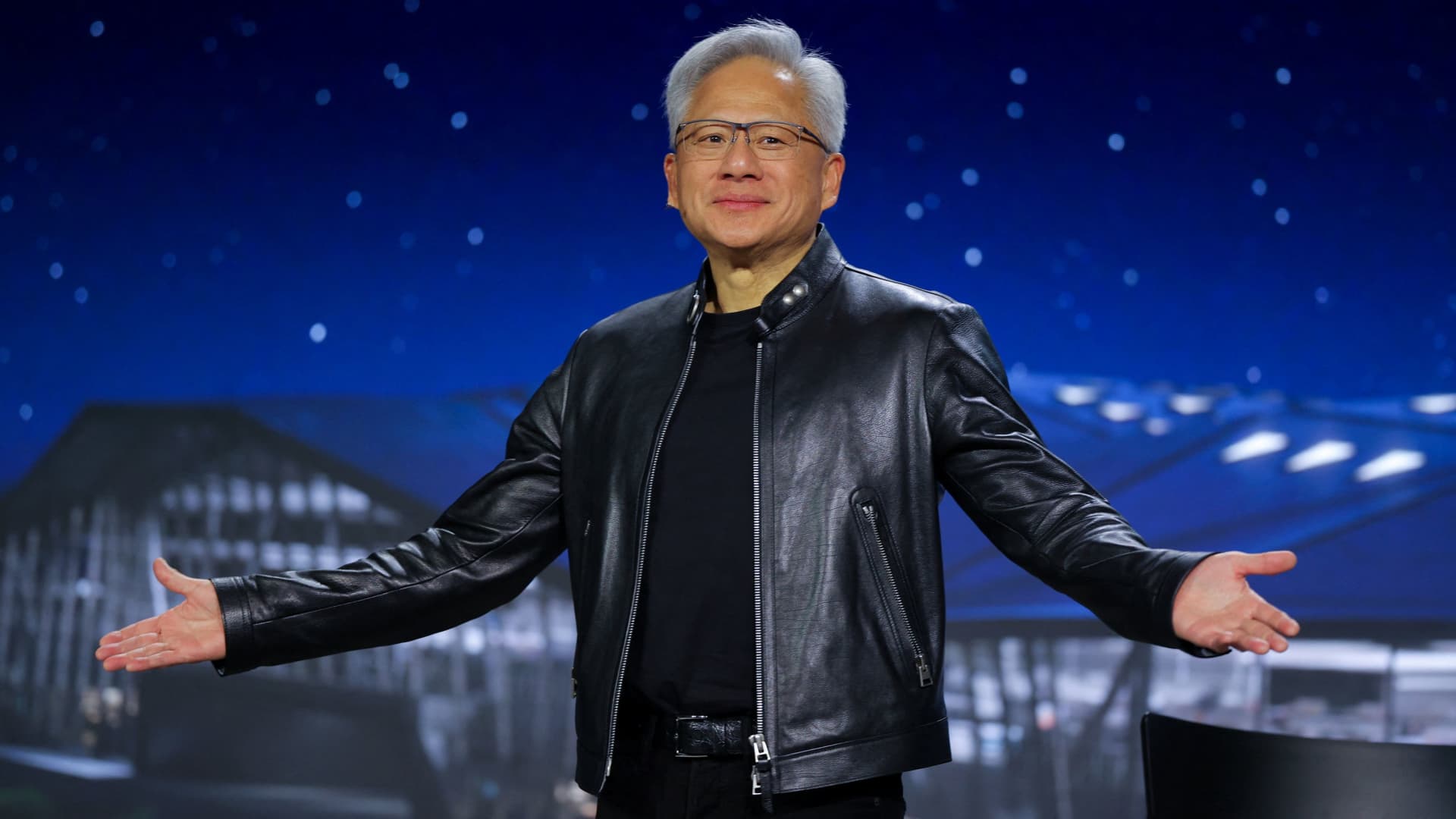
China's AI Tigers Roar: Jensen Huang OpenClaw Endorsement Ignites Zhipu & Minimax Growth
The global artificial intelligence landscape is witnessing a dramatic shift, with China's tech powerhouses asserting their dominance. Recent weeks have seen a palpable surge in the fortunes of Chinese AI companies, particularly Zhipu and Minimax, following high-profile remarks from Nvidia CEO Jensen Huang. His emphatic endorsement of OpenClaw, an open-source AI agent, as "definitely the next ChatGPT," has sent ripples through the market, propelling these "AI tigers" to new heights and underscoring China's escalating influence in the development and adoption of cutting-edge AI technologies.
This isn't just about market speculation; it's a testament to the transformative potential of agentic AI, a domain where companies like Zhipu and Minimax are making significant strides. The connection between Jensen Huang OpenClaw praise and the subsequent market performance of these innovators highlights a critical juncture in AI's evolution – one where specialized, autonomous agents are poised to unlock unprecedented capabilities for users and enterprises alike.
The Roar of the AI Tigers: Zhipu and Minimax's Ascendance
Chinese artificial intelligence stocks experienced a phenomenal rally, with MiniMax and Knowledge Atlas Technology, known as Zhipu, seeing their shares skyrocket by 22% and 14% in Hong Kong, respectively. This meteoric rise is directly attributable to the market's enthusiastic reception of Jensen Huang's optimistic outlook on AI agents and, more specifically, OpenClaw. These companies are not merely beneficiaries of a bullish market; they are active architects of China's AI future, dubbed "AI tigers" for their ambition to rival global giants like OpenAI and Anthropic in the large language model (LLM) arena.
Both Zhipu and Minimax have strategically positioned themselves at the forefront of agentic AI development. Their recent offerings are deeply integrated with the OpenClaw framework, showcasing a clear vision for the future of AI applications. Zhipu, for instance, recently unveiled GLM-5, an open-source large language model designed with enhanced coding abilities and robust support for extended agent-based tasks. This move signals a commitment to not just understanding but actively shaping the capabilities of AI agents, pushing boundaries in areas like automated code generation and complex task orchestration.
Minimax, similarly, has been ramping up its agentic AI offerings, rolling out tools specifically built on OpenClaw. Their approach focuses on empowering users to achieve more with AI by leveraging these intelligent agents for a variety of functions, from automating workflows to providing sophisticated analytical insights. The rapid adoption of OpenClaw by these key players underlines its growing significance and validates Huang's vision of its potential to revolutionize user interaction with AI.
The strategic decisions by Zhipu and Minimax to embrace and build upon OpenClaw demonstrate their agility and foresight. By integrating this powerful open-source agent, they are not only enhancing their product portfolios but also contributing to a vibrant ecosystem that fosters innovation and rapid deployment of advanced AI solutions across China and potentially globally.
Jensen Huang's Vision: OpenClaw as the "Next ChatGPT" and AI's Windows Moment
Nvidia CEO Jensen Huang's pronouncements are rarely taken lightly in the tech world, and his unequivocal praise for OpenClaw has resonated deeply. During recent discussions, including one with CNBC’s Jim Cramer, Huang declared that OpenClaw was "definitely the next ChatGPT," a statement that immediately captured headlines and ignited market excitement. He described it as a "transformative step" that significantly expands what users can achieve with artificial intelligence.
This comparison to ChatGPT is particularly potent. ChatGPT represented a watershed moment, making advanced AI accessible and demonstrating the power of large language models to the broader public. By likening OpenClaw to this phenomenon, Huang isn't just offering a compliment; he's predicting a similar, if not greater, paradigm shift in how we interact with and utilize AI. The core of this shift lies in OpenClaw's nature as an open-source AI agent.
What exactly does this mean? Unlike traditional LLMs that primarily generate text based on prompts, AI agents like OpenClaw are designed to autonomously understand goals, plan actions, execute tasks, and even learn from interactions within their environment. They can leverage various tools, access external information, and make decisions to achieve complex objectives, much like a digital assistant on steroids. This "agentic" capability is what Huang believes will unlock the next wave of AI innovation, moving beyond mere generative capabilities to truly intelligent, goal-oriented systems.
Huang further emphasized OpenClaw's revolutionary potential by drawing another powerful analogy: he stated that OpenClaw "revolutionizes AI, akin to Windows' impact on personal computing." This comparison underscores a vision of OpenClaw becoming a fundamental operating system or framework for AI, providing the foundational layer upon which countless applications and intelligent services will be built. Just as Windows democratized access to personal computing, OpenClaw is poised to democratize access to advanced agentic AI, making sophisticated capabilities available to a wider array of developers and users.
Nvidia, recognizing the importance of this open-source movement, has also introduced NemoClaw, a counterpart designed to provide enhanced security features for OpenClaw users. This move highlights a crucial aspect of widespread AI adoption: the need for robust security and reliable frameworks, especially for enterprise-level applications. The convergence of an open-source, transformative agent like OpenClaw with secure, enterprise-grade solutions like NemoClaw sets the stage for a rapid and responsible expansion of AI capabilities. For a deeper dive into Huang's perspective, check out our related article: Jensen Huang Calls OpenClaw 'Next ChatGPT,' Fuels China AI Boom. For more on the "Windows Moment" analogy, read OpenClaw: Why Nvidia CEO Huang Sees It as AI's Windows Moment.
China's Strategic Leap in the Global AI Arena
The enthusiasm surrounding Jensen Huang OpenClaw endorsement is not an isolated incident but rather a significant indicator of China's broader strategic positioning in the global AI race. As Moody's recently noted, "China’s rapid uptake of artificial intelligence reinforces its position as one of the world’s leading AI markets." This isn't just about raw investment; it's about the innovative capacity and the speed of integration that Chinese firms demonstrate.
However, the adoption landscape within China is nuanced. While large technology firms like Zhipu and Minimax are at the forefront, driving the most advanced and financially meaningful AI integration, adoption remains uneven across sectors. Consumer and industrial companies are adopting the technology more selectively, primarily focusing on improving efficiency and optimizing specific processes rather than embarking on wholesale transformations. This measured approach reflects varying levels of digital readiness and distinct credit implications across different industries.
Companies like SenseTime, which has successfully pivoted from its origins in facial recognition surveillance to developing comprehensive AI software platforms, exemplify the adaptability and strategic foresight prevalent in the Chinese tech sector. Their ability to reorient their core business to capitalize on emerging AI trends speaks volumes about the dynamic nature of China's AI ecosystem.
The economic ramifications extend beyond China's borders. Huang's broader predictions, such as expecting purchase orders between Blackwell and Vera Rubin to reach $1 trillion through 2027, have also fueled surges in other Asian tech stocks. SK Hynix gained nearly 9%, while Samsung Electronics added 7.53%, reflecting the interconnectedness of the global semiconductor and AI supply chains. This global impact underscores that innovations happening in one part of the world, particularly those backed by influential figures like Jensen Huang, can have far-reaching economic consequences.
Practical Implications for Businesses and Developers
The rise of OpenClaw and agentic AI presents significant opportunities and challenges for businesses and developers globally. Here are some actionable insights:
- Embrace Agentic AI Early: Don't just focus on generative AI. Explore how AI agents can automate complex workflows, improve decision-making, and personalize user experiences. Experiment with frameworks like OpenClaw to understand their capabilities.
- Prioritize Open-Source Integration: The success of OpenClaw highlights the power of open-source innovation. Businesses should evaluate open-source AI agents for their flexibility, community support, and potential for rapid customization.
- Focus on Security and Reliability: As AI agents gain more autonomy, ensuring their security and ethical operation becomes paramount. Solutions like Nvidia's NemoClaw indicate the industry's recognition of this need. When adopting agentic AI, rigorously assess its security protocols and potential vulnerabilities.
- Invest in Developer Skills: The shift towards agentic AI requires a workforce skilled in not just machine learning, but also prompt engineering for agents, tool integration, and understanding autonomous system design.
- Strategic Partnerships: Large technology firms are driving significant advancements. For smaller companies, strategic partnerships or leveraging platforms provided by leaders like Zhipu and Minimax could be a faster path to adoption.
The lessons from China's "AI tigers" demonstrate that rapid adoption, strategic integration of cutting-edge open-source tools, and a clear vision for autonomous AI agents are critical for staying competitive in this fast-evolving technological landscape.
Conclusion
The resounding endorsement of OpenClaw by Nvidia CEO Jensen Huang has undeniably propelled China's AI "tigers," Zhipu and Minimax, into the spotlight, showcasing their prowess in the burgeoning field of agentic AI. Huang's vision of OpenClaw as "definitely the next ChatGPT" and a "Windows moment" for AI underscores a pivotal shift towards more autonomous, goal-oriented AI systems. As Zhipu and Minimax leverage this open-source agent to develop groundbreaking tools like GLM-5 and advanced agentic offerings, they are not only driving their own growth but also reinforcing China's position as a formidable leader in the global AI arena. The ripple effects of this development are profound, signaling a new era where intelligent agents will redefine human-AI interaction and unlock unprecedented efficiencies across industries. The story of Jensen Huang OpenClaw and the surging Chinese AI market is a testament to the transformative power of innovation and strategic foresight in the race to shape the future of artificial intelligence.